UK SLAMS ISRAEL, BACKS PALESTINIAN CAUSE
The British government on Tuesday suspended free trade talks with Israel and hit West Bank settlers with sanctions, hours after vowing “concrete actions” if Israel didn’t stop its new military offensive in Gaza.
Pressure from close allies is mounting on Israel following a nearly three-month blockade of supplies into Gaza that led to famine warnings. Even the United States, a staunch ally, has voiced concerns over the hunger crisis.
British Foreign Secretary David Lammy said the government couldn’t continue discussions on an existing trade agreement with an Israeli government pursuing what he called egregious policies in Gaza and the Israeli-occupied West Bank.
“History will judge them,” Lammy said. “Blocking aid. Expanding the war. Dismissing the concerns of your friends and partners. This is indefensible. And it must stop.”
Lammy said the U.K. was imposing sanctions on a further “three individuals, two illegal settler outposts and two organizations supporting violence against the Palestinian community.”
He said the illegal Israeli settlements were spreading across the West Bank “with the explicit support of this Israeli government.”
Israel’s Foreign Ministry spokesperson Oren Marmorstein called the sanctions against West Bank settlers “unjustified and regrettable” and said the free trade agreement negotiations were not being advanced by the U.K. anyway.
Source: U.K. suspends free trade talks with Israel and announces sanctions over West Bank settlers
Subscribe



Today’s Birthday
-
Jean-Paul Sartre (1905)June 21, 2026
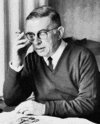 Sartre was a French philosopher, playwright, and novelist who became the foremost exponent of existentialism in the 20th century. His first novel, Nausea, was one of many works depicting man as a lonely being burdened with a terrifying freedom. He served in World War II, was taken prisoner, escaped, and was involved in the French resistance, during which he wrote multiple works. In 1964, he became the first person to voluntarily decline the Nobel Prize in Literature. Why did he refuse it?
 Sartre was a French philosopher, playwright, and novelist who became the foremost exponent of existentialism in the 20th century. His first novel, Nausea, was one of many works depicting man as a lonely being burdened with a terrifying freedom. He served in World War II, was taken prisoner, escaped, and was involved in the French resistance, during which he wrote multiple works. In 1964, he became the first person to voluntarily decline the Nobel Prize in Literature. Why did he refuse it?
Today’s Holiday
-
National Aboriginal DayJune 21, 2026
.jpg) Long before a national holiday was established, this day of the year had been observed by Canada's Inuit, Métis, and First Nations peoples as a celebration of Aboriginal heritage. In 1996, the Canadian government made June 21 an official holiday, including all citizens in the observance. Celebrations take place throughout Canada, and are organized by the regional offices of Indian and Northern Affairs Canada and Canadian Heritage. Some festivities are modest celebrations; others exhibit a stronger focus on culture and tradition by holding canoe races, powwows, and awareness events.
Long before a national holiday was established, this day of the year had been observed by Canada's Inuit, Métis, and First Nations peoples as a celebration of Aboriginal heritage. In 1996, the Canadian government made June 21 an official holiday, including all citizens in the observance. Celebrations take place throughout Canada, and are organized by the regional offices of Indian and Northern Affairs Canada and Canadian Heritage. Some festivities are modest celebrations; others exhibit a stronger focus on culture and tradition by holding canoe races, powwows, and awareness events.
.jpg) Long before a national holiday was established, this day of the year had been observed by Canada's
Long before a national holiday was established, this day of the year had been observed by Canada's ARTICLE OF THE DAY
-
CigarsJune 21, 2026
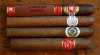 Cigars, tightly rolled bundles of cured tobacco, were being smoked by the Mayans as early as the 10th century. Spanish travelers to the Americas brought cigars back to Spain in the 16th century, and their popularity then spread throughout Europe. The word cigar, therefore, derives from the Mayan word for tobacco. What did US President John F. Kennedy reportedly do immediately before imposing the Cuban trade embargo that, among other things, prohibits US residents from purchasing Cuban cigars?
 Cigars, tightly rolled bundles of cured tobacco, were being smoked by the Mayans as early as the 10th century. Spanish travelers to the Americas brought cigars back to Spain in the 16th century, and their popularity then spread throughout Europe. The word cigar, therefore, derives from the Mayan word for tobacco. What did US President John F. Kennedy reportedly do immediately before imposing the Cuban trade embargo that, among other things, prohibits US residents from purchasing Cuban cigars?
Leave a Reply
You must be logged in to post a comment.