Secret Service Crushes High-Tech Threat Against Officials
In a shocking revelation that underscores the escalating threats to national security, the U.S. Secret Service has dismantled a complex network of over 300 SIM servers and 100,000 SIM cards operating throughout the New York tristate area, posing an imminent danger to senior government officials amidst the UN General Assembly. This clandestine operation, reminiscent of a ’70s spy thriller, involved sophisticated telecommunications devices capable of executing a wide array of attacks, from disabling cell towers to facilitating encrypted communications between criminal enterprises and foreign adversaries. With initial findings hinting at collusion between nation-state actors and known criminals, Secret Service Director Sean Curran emphasized the urgency of this counter-terrorism effort, stating that such threats to the nation’s telecommunications infrastructure cannot be taken lightly. In an operation that models vigilant preemption over reactive measures, the Secret Service and its dedicated Advanced Threat Interdiction Unit have sent a clear message: there will be zero tolerance for those who seek to disrupt American safety, particularly during such a pivotal moment in the heart of one of the world's largest cities.
Subscribe



Today’s Birthday
-
Jean-Paul Sartre (1905)June 21, 2026
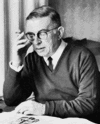 Sartre was a French philosopher, playwright, and novelist who became the foremost exponent of existentialism in the 20th century. His first novel, Nausea, was one of many works depicting man as a lonely being burdened with a terrifying freedom. He served in World War II, was taken prisoner, escaped, and was involved in the French resistance, during which he wrote multiple works. In 1964, he became the first person to voluntarily decline the Nobel Prize in Literature. Why did he refuse it?
 Sartre was a French philosopher, playwright, and novelist who became the foremost exponent of existentialism in the 20th century. His first novel, Nausea, was one of many works depicting man as a lonely being burdened with a terrifying freedom. He served in World War II, was taken prisoner, escaped, and was involved in the French resistance, during which he wrote multiple works. In 1964, he became the first person to voluntarily decline the Nobel Prize in Literature. Why did he refuse it?
Today’s Holiday
-
National Aboriginal DayJune 21, 2026
.jpg) Long before a national holiday was established, this day of the year had been observed by Canada's Inuit, Métis, and First Nations peoples as a celebration of Aboriginal heritage. In 1996, the Canadian government made June 21 an official holiday, including all citizens in the observance. Celebrations take place throughout Canada, and are organized by the regional offices of Indian and Northern Affairs Canada and Canadian Heritage. Some festivities are modest celebrations; others exhibit a stronger focus on culture and tradition by holding canoe races, powwows, and awareness events.
Long before a national holiday was established, this day of the year had been observed by Canada's Inuit, Métis, and First Nations peoples as a celebration of Aboriginal heritage. In 1996, the Canadian government made June 21 an official holiday, including all citizens in the observance. Celebrations take place throughout Canada, and are organized by the regional offices of Indian and Northern Affairs Canada and Canadian Heritage. Some festivities are modest celebrations; others exhibit a stronger focus on culture and tradition by holding canoe races, powwows, and awareness events.
.jpg) Long before a national holiday was established, this day of the year had been observed by Canada's
Long before a national holiday was established, this day of the year had been observed by Canada's ARTICLE OF THE DAY
-
CigarsJune 21, 2026
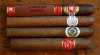 Cigars, tightly rolled bundles of cured tobacco, were being smoked by the Mayans as early as the 10th century. Spanish travelers to the Americas brought cigars back to Spain in the 16th century, and their popularity then spread throughout Europe. The word cigar, therefore, derives from the Mayan word for tobacco. What did US President John F. Kennedy reportedly do immediately before imposing the Cuban trade embargo that, among other things, prohibits US residents from purchasing Cuban cigars?
 Cigars, tightly rolled bundles of cured tobacco, were being smoked by the Mayans as early as the 10th century. Spanish travelers to the Americas brought cigars back to Spain in the 16th century, and their popularity then spread throughout Europe. The word cigar, therefore, derives from the Mayan word for tobacco. What did US President John F. Kennedy reportedly do immediately before imposing the Cuban trade embargo that, among other things, prohibits US residents from purchasing Cuban cigars?
Leave a Reply
You must be logged in to post a comment.