OAKLAND’S ELITE DEBATE $30 WAGE WHILE MARK DORSEY HOLDS TWO JOBS
Mark Dorsey, a lifelong East Oakland resident, works two jobs to make ends meet. The 35-year-old Californian relies on manufacturing and service work through temp agencies and tries to work overtime or 10- to 12-hour shifts because “that’s the only way you can see a paycheck that’s worth something”.
Dorsey often makes minimum wage or close to it. The city of Oakland’s minimum wage is currently $17.34 an hour, higher than the minimum wage for the state of California, currently $16.90 an hour, but still not enough to support Dorsey.
Now, he is part of a campaign to almost double California’s minimum wage to $30. The drive comes as New York City has a bill tabled to increase its hourly minimum to $30 an hour, backed by Zohran Mamdani, the mayor.
Subscribe



Today’s Birthday
-
Chester Burton "Chet" Atkins, Mister Guitar (1924)June 20, 2026
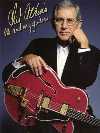 Atkins got his first guitar by making a trade with his brother, and it was arguably the best deal he ever made. Although he struggled with shyness and suffered from severe asthma—he had to sleep sitting up and often fell asleep still holding his guitar—he became an accomplished guitarist and went on to release several hit records, develop a signature line of guitars, and help create country music's "Nashville sound." What did "Mr. Guitar," as he came to be known, trade to get that first guitar?
 Atkins got his first guitar by making a trade with his brother, and it was arguably the best deal he ever made. Although he struggled with shyness and suffered from severe asthma—he had to sleep sitting up and often fell asleep still holding his guitar—he became an accomplished guitarist and went on to release several hit records, develop a signature line of guitars, and help create country music's "Nashville sound." What did "Mr. Guitar," as he came to be known, trade to get that first guitar?
Today’s Holiday
-
West Virginia DayJune 20, 2026
 West Virginia Day is a state holiday in West Virginia to celebrate its joining the Union in 1863 as the 35th state. The creation of the state was a result of the Civil War. The settlers of western Virginia defied the state's vote to secede from the Union, and on June 20 West Virginia formally entered the Union as an anti-slave state. The day is marked with ceremonies at the state capitol in Charleston and at the West Virginia Independence Hall in Wheeling. It was there that the conventions were held to declare West Virginia's independence from Virginia.
 West Virginia Day is a state holiday in
 ARTICLE OF THE DAY
-
Black TeaJune 20, 2026
 Excluding water, tea is the most widely consumed drink on the planet, drunk either hot or cold by half the world's population. The vast majority of tea sold in the West is black tea, made from fermented leaves of the Camellia sinensis plant. Generally stronger in flavor and more caffeinated than the green and oolong varieties, black tea retains its flavor for several years and has long been an article of trade, serving as a form of currency into the 19th century in what countries?
 Excluding water, tea is the most widely consumed drink on the planet, drunk either hot or cold by half the world's population. The vast majority of tea sold in the West is black tea, made from fermented leaves of the Camellia sinensis plant. Generally stronger in flavor and more caffeinated than the green and oolong varieties, black tea retains its flavor for several years and has long been an article of trade, serving as a form of currency into the 19th century in what countries?
Leave a Reply
You must be logged in to post a comment.