KETANJI’S LONE RODEO: WARNING, HEALTHCARE SWINGS FROM A CLIFF, NOBODY RIDES ALONG
Justice Ketanji Brown Jackson couldn’t get a single colleague to join her dissent warning of “catastrophic” fallout from upholding a Christian counselor’s free speech rights.
The Supreme Court found 8-1 Tuesday that Colorado’s ban on “conversion therapy” was viewpoint discrimination against Kasey Chiles, who was barred under the law from offering talk therapy encouraging gender-confused kids to feel comfortable in their bodies.
“Ultimately, because the majority plays with fire in this case, I fear that the people of this country will get burned,” Jackson wrote in her 34-page solo dissent.
“It is baffling that we could now be standing on the edge of a precipitous drop in the quality of healthcare services in America,” Jackson wrote. “But the Court sees fit to bring us one step closer to that fate today. Stranger still is the fact that this possibility looms in the 21st century—given what science now enables us to know about medical conditions and treatments, what our cases say, and what we all should have learned by now from history.”
Subscribe



Today’s Birthday
-
Chester Burton "Chet" Atkins, Mister Guitar (1924)June 20, 2026
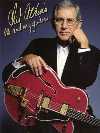 Atkins got his first guitar by making a trade with his brother, and it was arguably the best deal he ever made. Although he struggled with shyness and suffered from severe asthma—he had to sleep sitting up and often fell asleep still holding his guitar—he became an accomplished guitarist and went on to release several hit records, develop a signature line of guitars, and help create country music's "Nashville sound." What did "Mr. Guitar," as he came to be known, trade to get that first guitar?
 Atkins got his first guitar by making a trade with his brother, and it was arguably the best deal he ever made. Although he struggled with shyness and suffered from severe asthma—he had to sleep sitting up and often fell asleep still holding his guitar—he became an accomplished guitarist and went on to release several hit records, develop a signature line of guitars, and help create country music's "Nashville sound." What did "Mr. Guitar," as he came to be known, trade to get that first guitar?
Today’s Holiday
-
West Virginia DayJune 20, 2026
 West Virginia Day is a state holiday in West Virginia to celebrate its joining the Union in 1863 as the 35th state. The creation of the state was a result of the Civil War. The settlers of western Virginia defied the state's vote to secede from the Union, and on June 20 West Virginia formally entered the Union as an anti-slave state. The day is marked with ceremonies at the state capitol in Charleston and at the West Virginia Independence Hall in Wheeling. It was there that the conventions were held to declare West Virginia's independence from Virginia.
 West Virginia Day is a state holiday in
 ARTICLE OF THE DAY
-
Black TeaJune 20, 2026
 Excluding water, tea is the most widely consumed drink on the planet, drunk either hot or cold by half the world's population. The vast majority of tea sold in the West is black tea, made from fermented leaves of the Camellia sinensis plant. Generally stronger in flavor and more caffeinated than the green and oolong varieties, black tea retains its flavor for several years and has long been an article of trade, serving as a form of currency into the 19th century in what countries?
 Excluding water, tea is the most widely consumed drink on the planet, drunk either hot or cold by half the world's population. The vast majority of tea sold in the West is black tea, made from fermented leaves of the Camellia sinensis plant. Generally stronger in flavor and more caffeinated than the green and oolong varieties, black tea retains its flavor for several years and has long been an article of trade, serving as a form of currency into the 19th century in what countries?
Leave a Reply
You must be logged in to post a comment.