JOURNAL FRAUD… FICTION EXPLOSION…138 MEDICAL MYTHS
A Canadian journal has issued corrections on 138 case reports it published over the last 25 years to add a disclaimer: The cases described are fictional.
Paediatrics & Child Health, the journal of the Canadian Paediatric Society, has published the cases since 2000 in articles for a series for its Canadian Paediatric Surveillance Program. The articles usually start with a case description followed by “learning points” that include statistics, clinical observations and data from CPSP. The peer-reviewed articles don’t state anywhere the cases described are fictional.
A Canadian journal, Paediatrics & Child Health, has issued corrections on 138 case reports published over 25 years to clarify that the cases are fictional, a detail never directly disclosed in the articles. These peer-reviewed reports, used for education in the Canadian Paediatric Surveillance Program, presented fictional cases as real, including the widely cited "Baby boy blue" case, which was believed to be a key example of neonatal opioid toxicity from breastfeeding but has been debunked by subsequent analysis revealing pharmacological impossibilities and evidence of direct opioid administration. Critics, including researcher Juurlink, argue that simply correcting the cases is insufficient—especially for the Baby boy blue case, which should be retracted due to its misleading impact on medical understanding.
Subscribe



Today’s Birthday
-
Chester Burton "Chet" Atkins, Mister Guitar (1924)June 20, 2026
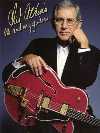 Atkins got his first guitar by making a trade with his brother, and it was arguably the best deal he ever made. Although he struggled with shyness and suffered from severe asthma—he had to sleep sitting up and often fell asleep still holding his guitar—he became an accomplished guitarist and went on to release several hit records, develop a signature line of guitars, and help create country music's "Nashville sound." What did "Mr. Guitar," as he came to be known, trade to get that first guitar?
 Atkins got his first guitar by making a trade with his brother, and it was arguably the best deal he ever made. Although he struggled with shyness and suffered from severe asthma—he had to sleep sitting up and often fell asleep still holding his guitar—he became an accomplished guitarist and went on to release several hit records, develop a signature line of guitars, and help create country music's "Nashville sound." What did "Mr. Guitar," as he came to be known, trade to get that first guitar?
Today’s Holiday
-
West Virginia DayJune 20, 2026
 West Virginia Day is a state holiday in West Virginia to celebrate its joining the Union in 1863 as the 35th state. The creation of the state was a result of the Civil War. The settlers of western Virginia defied the state's vote to secede from the Union, and on June 20 West Virginia formally entered the Union as an anti-slave state. The day is marked with ceremonies at the state capitol in Charleston and at the West Virginia Independence Hall in Wheeling. It was there that the conventions were held to declare West Virginia's independence from Virginia.
 West Virginia Day is a state holiday in
 ARTICLE OF THE DAY
-
Black TeaJune 20, 2026
 Excluding water, tea is the most widely consumed drink on the planet, drunk either hot or cold by half the world's population. The vast majority of tea sold in the West is black tea, made from fermented leaves of the Camellia sinensis plant. Generally stronger in flavor and more caffeinated than the green and oolong varieties, black tea retains its flavor for several years and has long been an article of trade, serving as a form of currency into the 19th century in what countries?
 Excluding water, tea is the most widely consumed drink on the planet, drunk either hot or cold by half the world's population. The vast majority of tea sold in the West is black tea, made from fermented leaves of the Camellia sinensis plant. Generally stronger in flavor and more caffeinated than the green and oolong varieties, black tea retains its flavor for several years and has long been an article of trade, serving as a form of currency into the 19th century in what countries?
Leave a Reply
You must be logged in to post a comment.