Fixing FISA, House Judiciary GOP
Fry: Professor Turley, I’d like to go back to something you mentioned earlier as well. And that is the concept of making the FISC court process. More adversarial adding an adversarial component of that or having an amicus involved in that process. Would you elaborate for us on how you think that type of reform could be implemented and how that might look?
Schaerr: Thank you very much for that question. Congress years ago implemented this amicus process by which the court can reach out by what the Congress described as novel questions to get the assistance of essentially a third party view separate from the government that has been relatively underutilized. And as far as I know, there’s no indication it’s ever been used in an individual case where the FIS court says, can you look at this application? And what we know is that when we actually put those applications under a spotlight, which is relatively rare?
As the, as the chair mentioned out of, I think 29 cases reviewed 25 of them were in error. So there’s obviously a need for some additional viewpoint. I don’t think that’s going to be achieved with, with any amicus cure eye. I think that what you really need is this sort of concept of a special advocate, a very formal office that has the ability among other things to bring a case to the appellate FISA court to, to say that there’s a problem here that you should reveal or review.I think that would be very useful to have an actual privacy advocate with security advocacy. If you’re going to have a secret court, let’s make sure both are represented. Thank you, Professor Charley and Mr Chairman, I yield back.
Subscribe



Today’s Birthday
-
James Buchanan "Diamond Jim" Brady (1856)August 12, 2026
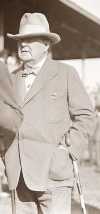 Financier and philanthropist "Diamond Jim" Brady exemplified the American Dream. He started out as a bellboy and messenger before getting a job with the New York Central Railroad and then working his way up through the industry, eventually amassing a fortune selling railroad supplies. With his newfound wealth, he indulged in his two greatest weaknesses: food—one restaurant owner reportedly called him "the best 25 customers I ever had"—and jewels. What was supposedly a typical meal for Brady?
 Financier and philanthropist "Diamond Jim" Brady exemplified the American Dream. He started out as a bellboy and messenger before getting a job with the New York Central Railroad and then working his way up through the industry, eventually amassing a fortune selling railroad supplies. With his newfound wealth, he indulged in his two greatest weaknesses: food—one restaurant owner reportedly called him "the best 25 customers I ever had"—and jewels. What was supposedly a typical meal for Brady?
Today’s Holiday
-
Queen's Birthday (Thailand)August 12, 2026
 The Queen's Birthday is a nationwide celebration in Thailand of the birthday of Her Majesty Queen Sirikit (b. 1932). Throughout the country, buildings are decorated to honor the queen, but the most splendid are in Bangkok, where buildings and streets are brilliant with colored lights.
 The Queen's Birthday is a nationwide celebration in
 ARTICLE OF THE DAY
-
Lake MalawiAugust 12, 2026
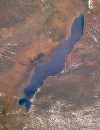 The third largest lake in Africa and ninth largest in the world, Lake Malawi is bounded on the west and south by Malawi, on the east by Mozambique, and on the north by Tanzania. Also known as Lake Nyasa—so named by Scottish missionary David Livingstone in 1859—it is approximately 360 miles (580 km) long with an average width of 25 miles (40 km). Fed by 14 rivers, it is home to more than 200 recorded species of fish—making it one of the most species-diverse lakes in the world. How deep is it?
 The third largest lake in Africa and ninth largest in the world, Lake Malawi is bounded on the west and south by Malawi, on the east by Mozambique, and on the north by Tanzania. Also known as Lake Nyasa—so named by Scottish missionary David Livingstone in 1859—it is approximately 360 miles (580 km) long with an average width of 25 miles (40 km). Fed by 14 rivers, it is home to more than 200 recorded species of fish—making it one of the most species-diverse lakes in the world. How deep is it?
Leave a Reply
You must be logged in to post a comment.