Deep State Strikes: DNI Tulsi Gabbard Under Fire
In a dramatic clash within the corridors of power, the fervent battle against internal corruption unfolds as two pivotal figures, HHS Secretary RFK Jr. and DNI Tulsi Gabbard, find themselves relentlessly targeted for their audacity to investigate the very heart of the Deep State. While Gabbard’s recent revocation of security clearances for 37 officials has ignited a firestorm of opposition from entrenched leaks within the CIA and Main Justice, the narrative spun by anti-Trump operatives seeks to undermine her efforts to hold figures like former CIA Director John Brennan accountable. As arch-skeptics accuse Gabbard of obstructing potential testimony against Brennan, they ignore the basic fact that former officials retain the ability to provide information based on their prior conduct, revealing the absurdity of their claims. In stark contrast, CIA Director John Ratcliffe faces minimal scrutiny, embodying a cowardly complicity that allows Gabbard to tackle the uncomfortable truths most officials fear to confront. With each new piece of evidence Gabbard uncovers and delivers straight to President Trump for declassification, the dialogical desperation of her detractors highlights a palpable, mounting panic as they scramble to halt the reformative momentum of a DNI who is undeniably poised to
Subscribe



Today’s Birthday
-
Jean-Paul Sartre (1905)June 21, 2026
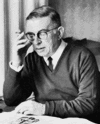 Sartre was a French philosopher, playwright, and novelist who became the foremost exponent of existentialism in the 20th century. His first novel, Nausea, was one of many works depicting man as a lonely being burdened with a terrifying freedom. He served in World War II, was taken prisoner, escaped, and was involved in the French resistance, during which he wrote multiple works. In 1964, he became the first person to voluntarily decline the Nobel Prize in Literature. Why did he refuse it?
 Sartre was a French philosopher, playwright, and novelist who became the foremost exponent of existentialism in the 20th century. His first novel, Nausea, was one of many works depicting man as a lonely being burdened with a terrifying freedom. He served in World War II, was taken prisoner, escaped, and was involved in the French resistance, during which he wrote multiple works. In 1964, he became the first person to voluntarily decline the Nobel Prize in Literature. Why did he refuse it?
Today’s Holiday
-
National Aboriginal DayJune 21, 2026
.jpg) Long before a national holiday was established, this day of the year had been observed by Canada's Inuit, Métis, and First Nations peoples as a celebration of Aboriginal heritage. In 1996, the Canadian government made June 21 an official holiday, including all citizens in the observance. Celebrations take place throughout Canada, and are organized by the regional offices of Indian and Northern Affairs Canada and Canadian Heritage. Some festivities are modest celebrations; others exhibit a stronger focus on culture and tradition by holding canoe races, powwows, and awareness events.
Long before a national holiday was established, this day of the year had been observed by Canada's Inuit, Métis, and First Nations peoples as a celebration of Aboriginal heritage. In 1996, the Canadian government made June 21 an official holiday, including all citizens in the observance. Celebrations take place throughout Canada, and are organized by the regional offices of Indian and Northern Affairs Canada and Canadian Heritage. Some festivities are modest celebrations; others exhibit a stronger focus on culture and tradition by holding canoe races, powwows, and awareness events.
.jpg) Long before a national holiday was established, this day of the year had been observed by Canada's
Long before a national holiday was established, this day of the year had been observed by Canada's ARTICLE OF THE DAY
-
CigarsJune 21, 2026
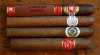 Cigars, tightly rolled bundles of cured tobacco, were being smoked by the Mayans as early as the 10th century. Spanish travelers to the Americas brought cigars back to Spain in the 16th century, and their popularity then spread throughout Europe. The word cigar, therefore, derives from the Mayan word for tobacco. What did US President John F. Kennedy reportedly do immediately before imposing the Cuban trade embargo that, among other things, prohibits US residents from purchasing Cuban cigars?
 Cigars, tightly rolled bundles of cured tobacco, were being smoked by the Mayans as early as the 10th century. Spanish travelers to the Americas brought cigars back to Spain in the 16th century, and their popularity then spread throughout Europe. The word cigar, therefore, derives from the Mayan word for tobacco. What did US President John F. Kennedy reportedly do immediately before imposing the Cuban trade embargo that, among other things, prohibits US residents from purchasing Cuban cigars?
Leave a Reply
You must be logged in to post a comment.