Court Defends Christian School Against Transgender Sports Agenda
In a groundbreaking decision that underscores the mounting tension between religious freedom and progressive mandates, a federal appeals court has ruled in favor of Mid Vermont Christian School, allowing the institution to return to the state’s sports league after it was unjustly banned for adhering to its religious convictions. The court's opinion condemned the Vermont Principals' Association for its evident hostility towards the school's beliefs, noting that the expulsion was not only unprecedented but also a brazen act of ideological enforcement masquerading as policy. This dispute ignited when the Quechee-based school forfeited a pivotal basketball game, fearing that fielding a team against a transgender player would compromise both the fairness and safety of the competition. The Vermont education authorities, however, retaliated by stripping the school of its eligibility for all state-sponsored events, a move characterized as blatant discrimination against religious institutions. As legal battles intensify, this case epitomizes the clash between parental rights, religious liberty, and the increasingly aggressive imposition of progressive social policies in the realm of education and athletics.
Subscribe



Today’s Birthday
-
Jean-Paul Sartre (1905)June 21, 2026
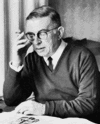 Sartre was a French philosopher, playwright, and novelist who became the foremost exponent of existentialism in the 20th century. His first novel, Nausea, was one of many works depicting man as a lonely being burdened with a terrifying freedom. He served in World War II, was taken prisoner, escaped, and was involved in the French resistance, during which he wrote multiple works. In 1964, he became the first person to voluntarily decline the Nobel Prize in Literature. Why did he refuse it?
 Sartre was a French philosopher, playwright, and novelist who became the foremost exponent of existentialism in the 20th century. His first novel, Nausea, was one of many works depicting man as a lonely being burdened with a terrifying freedom. He served in World War II, was taken prisoner, escaped, and was involved in the French resistance, during which he wrote multiple works. In 1964, he became the first person to voluntarily decline the Nobel Prize in Literature. Why did he refuse it?
Today’s Holiday
-
National Aboriginal DayJune 21, 2026
.jpg) Long before a national holiday was established, this day of the year had been observed by Canada's Inuit, Métis, and First Nations peoples as a celebration of Aboriginal heritage. In 1996, the Canadian government made June 21 an official holiday, including all citizens in the observance. Celebrations take place throughout Canada, and are organized by the regional offices of Indian and Northern Affairs Canada and Canadian Heritage. Some festivities are modest celebrations; others exhibit a stronger focus on culture and tradition by holding canoe races, powwows, and awareness events.
Long before a national holiday was established, this day of the year had been observed by Canada's Inuit, Métis, and First Nations peoples as a celebration of Aboriginal heritage. In 1996, the Canadian government made June 21 an official holiday, including all citizens in the observance. Celebrations take place throughout Canada, and are organized by the regional offices of Indian and Northern Affairs Canada and Canadian Heritage. Some festivities are modest celebrations; others exhibit a stronger focus on culture and tradition by holding canoe races, powwows, and awareness events.
.jpg) Long before a national holiday was established, this day of the year had been observed by Canada's
Long before a national holiday was established, this day of the year had been observed by Canada's ARTICLE OF THE DAY
-
CigarsJune 21, 2026
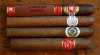 Cigars, tightly rolled bundles of cured tobacco, were being smoked by the Mayans as early as the 10th century. Spanish travelers to the Americas brought cigars back to Spain in the 16th century, and their popularity then spread throughout Europe. The word cigar, therefore, derives from the Mayan word for tobacco. What did US President John F. Kennedy reportedly do immediately before imposing the Cuban trade embargo that, among other things, prohibits US residents from purchasing Cuban cigars?
 Cigars, tightly rolled bundles of cured tobacco, were being smoked by the Mayans as early as the 10th century. Spanish travelers to the Americas brought cigars back to Spain in the 16th century, and their popularity then spread throughout Europe. The word cigar, therefore, derives from the Mayan word for tobacco. What did US President John F. Kennedy reportedly do immediately before imposing the Cuban trade embargo that, among other things, prohibits US residents from purchasing Cuban cigars?
Leave a Reply
You must be logged in to post a comment.