Censorship Fallout: YouTube Offers Channel Reinstatements!
In a stunning revelation that underscores the troubling intersection of politics and Big Tech, YouTube has acknowledged it caved to pressure from the Biden administration to censor creators—silencing voices that dared to challenge the official narrative on critical issues like COVID-19 and the 2020 election. This admission comes in the wake of a subpoena from House Judiciary Committee Chairman Jim Jordan, who has spearheaded a rigorous investigation into Google's practices. As part of the fallout, Alphabet, YouTube's parent company, revealed that it will now offer amnesty to creators previously banned for non-violent political speech, recognizing that censorship driven by governmental authority is both "unacceptable and wrong." Despite this attempt to restore free expression, skepticism lingers among those who suffered under the previous regime, with critics questioning the permanence of this newfound leniency. Prominent figures like James Corbett, who witnessed firsthand the consequences of such censorship, continue to doubt whether YouTube's promises will hold in the face of future crises. This dramatic turn of events not only raises serious concerns about the power of government overreach but also highlights the urgent need for vigilance in protecting freedom of speech in the digital age.
Subscribe



Today’s Birthday
-
Jean-Paul Sartre (1905)June 21, 2026
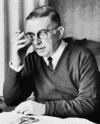 Sartre was a French philosopher, playwright, and novelist who became the foremost exponent of existentialism in the 20th century. His first novel, Nausea, was one of many works depicting man as a lonely being burdened with a terrifying freedom. He served in World War II, was taken prisoner, escaped, and was involved in the French resistance, during which he wrote multiple works. In 1964, he became the first person to voluntarily decline the Nobel Prize in Literature. Why did he refuse it?
 Sartre was a French philosopher, playwright, and novelist who became the foremost exponent of existentialism in the 20th century. His first novel, Nausea, was one of many works depicting man as a lonely being burdened with a terrifying freedom. He served in World War II, was taken prisoner, escaped, and was involved in the French resistance, during which he wrote multiple works. In 1964, he became the first person to voluntarily decline the Nobel Prize in Literature. Why did he refuse it?
Today’s Holiday
-
National Aboriginal DayJune 21, 2026
.jpg) Long before a national holiday was established, this day of the year had been observed by Canada's Inuit, Métis, and First Nations peoples as a celebration of Aboriginal heritage. In 1996, the Canadian government made June 21 an official holiday, including all citizens in the observance. Celebrations take place throughout Canada, and are organized by the regional offices of Indian and Northern Affairs Canada and Canadian Heritage. Some festivities are modest celebrations; others exhibit a stronger focus on culture and tradition by holding canoe races, powwows, and awareness events.
Long before a national holiday was established, this day of the year had been observed by Canada's Inuit, Métis, and First Nations peoples as a celebration of Aboriginal heritage. In 1996, the Canadian government made June 21 an official holiday, including all citizens in the observance. Celebrations take place throughout Canada, and are organized by the regional offices of Indian and Northern Affairs Canada and Canadian Heritage. Some festivities are modest celebrations; others exhibit a stronger focus on culture and tradition by holding canoe races, powwows, and awareness events.
.jpg) Long before a national holiday was established, this day of the year had been observed by Canada's
Long before a national holiday was established, this day of the year had been observed by Canada's ARTICLE OF THE DAY
-
CigarsJune 21, 2026
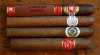 Cigars, tightly rolled bundles of cured tobacco, were being smoked by the Mayans as early as the 10th century. Spanish travelers to the Americas brought cigars back to Spain in the 16th century, and their popularity then spread throughout Europe. The word cigar, therefore, derives from the Mayan word for tobacco. What did US President John F. Kennedy reportedly do immediately before imposing the Cuban trade embargo that, among other things, prohibits US residents from purchasing Cuban cigars?
 Cigars, tightly rolled bundles of cured tobacco, were being smoked by the Mayans as early as the 10th century. Spanish travelers to the Americas brought cigars back to Spain in the 16th century, and their popularity then spread throughout Europe. The word cigar, therefore, derives from the Mayan word for tobacco. What did US President John F. Kennedy reportedly do immediately before imposing the Cuban trade embargo that, among other things, prohibits US residents from purchasing Cuban cigars?
Leave a Reply
You must be logged in to post a comment.