ANCHOR BABIES: Public Schools in Deep Trouble
Returning noncitizen children and noncitizen parents to their countries could save taxpayers hundreds of billions, especially in state budgets.
Afew simple calculations indicate that as much as one-quarter of U.S. public school enrollment could be anchor babies, meaning children with at least one parent illegally present in the United States. This alone amounts to at least $145.6 billion in public resources diverted from U.S. citizens every year.
Here’s the math. In April, the Kaiser Family Foundation estimated that 17 percent of school-age children, or nine million kids, in the United States are children of at least one illegal alien. The New York Times has reported on the estimate. Some of these children are also foreign citizens, while some were born in the United States. Under a longstanding court misinterpretation, being born in the United States currently confers U.S. citizenship. Almost no other developed countries confer citizenship solely by birth location.
That’s already one in six kids in the United States who are legally subject to deportation to continue living with their parents. If you also assume that all of this population attends public schools, the percentage is more than 17. That’s because only 80 percent of U.S. kids attend a traditional public school, according to 2024 figures from EdChoice.
Source: One-Quarter Of Public School Enrollment Could Be Anchor Babies
Subscribe



Today’s Birthday
-
Chester Burton "Chet" Atkins, Mister Guitar (1924)June 20, 2026
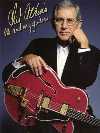 Atkins got his first guitar by making a trade with his brother, and it was arguably the best deal he ever made. Although he struggled with shyness and suffered from severe asthma—he had to sleep sitting up and often fell asleep still holding his guitar—he became an accomplished guitarist and went on to release several hit records, develop a signature line of guitars, and help create country music's "Nashville sound." What did "Mr. Guitar," as he came to be known, trade to get that first guitar?
 Atkins got his first guitar by making a trade with his brother, and it was arguably the best deal he ever made. Although he struggled with shyness and suffered from severe asthma—he had to sleep sitting up and often fell asleep still holding his guitar—he became an accomplished guitarist and went on to release several hit records, develop a signature line of guitars, and help create country music's "Nashville sound." What did "Mr. Guitar," as he came to be known, trade to get that first guitar?
Today’s Holiday
-
West Virginia DayJune 20, 2026
 West Virginia Day is a state holiday in West Virginia to celebrate its joining the Union in 1863 as the 35th state. The creation of the state was a result of the Civil War. The settlers of western Virginia defied the state's vote to secede from the Union, and on June 20 West Virginia formally entered the Union as an anti-slave state. The day is marked with ceremonies at the state capitol in Charleston and at the West Virginia Independence Hall in Wheeling. It was there that the conventions were held to declare West Virginia's independence from Virginia.
 West Virginia Day is a state holiday in
 ARTICLE OF THE DAY
-
Black TeaJune 20, 2026
 Excluding water, tea is the most widely consumed drink on the planet, drunk either hot or cold by half the world's population. The vast majority of tea sold in the West is black tea, made from fermented leaves of the Camellia sinensis plant. Generally stronger in flavor and more caffeinated than the green and oolong varieties, black tea retains its flavor for several years and has long been an article of trade, serving as a form of currency into the 19th century in what countries?
 Excluding water, tea is the most widely consumed drink on the planet, drunk either hot or cold by half the world's population. The vast majority of tea sold in the West is black tea, made from fermented leaves of the Camellia sinensis plant. Generally stronger in flavor and more caffeinated than the green and oolong varieties, black tea retains its flavor for several years and has long been an article of trade, serving as a form of currency into the 19th century in what countries?
Leave a Reply
You must be logged in to post a comment.